The Albanian Riviera Travel Guide: Three Weeks on Europe’s Best-Kept Secret
Words by Dalene Heck / Photography by Pete Heck
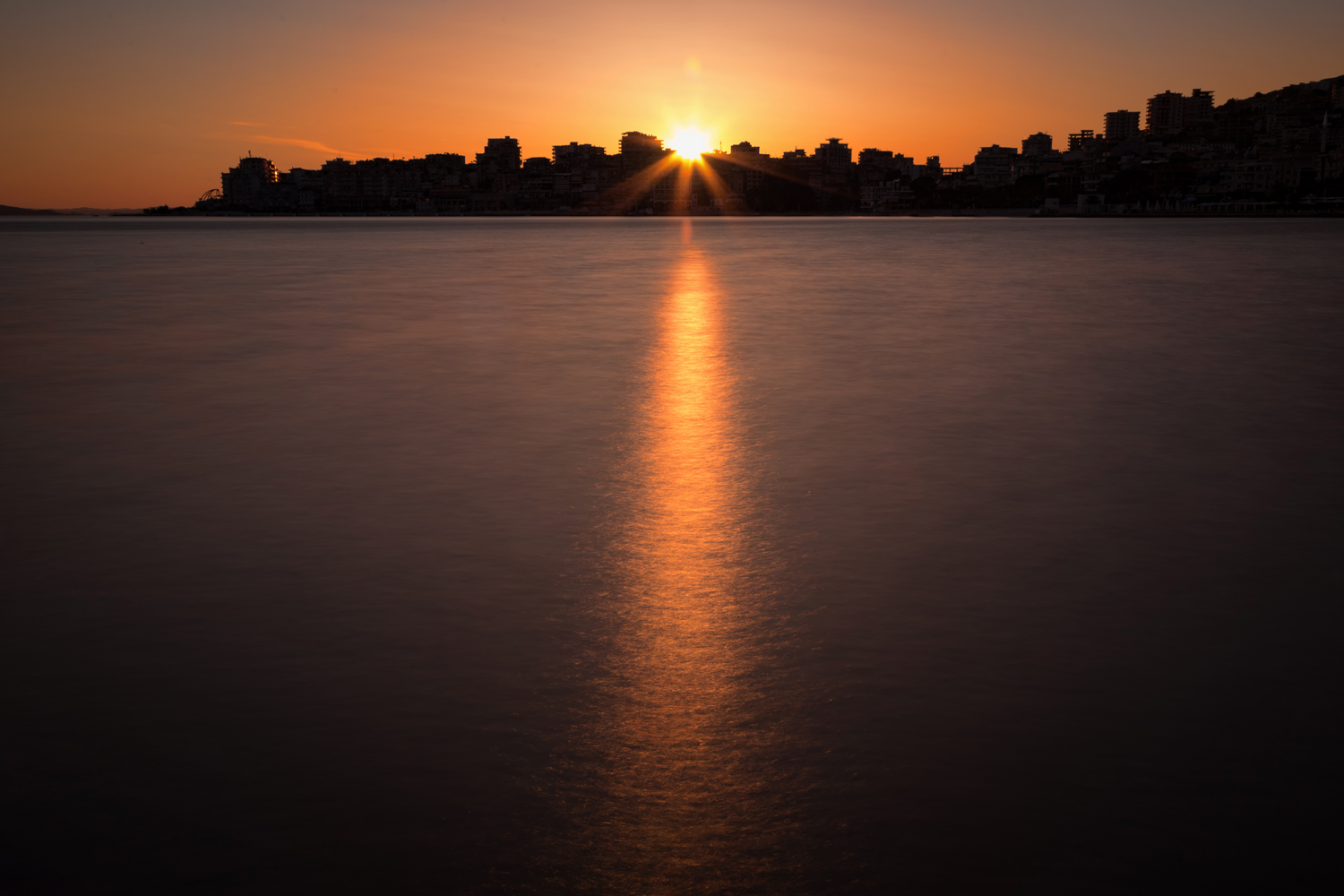
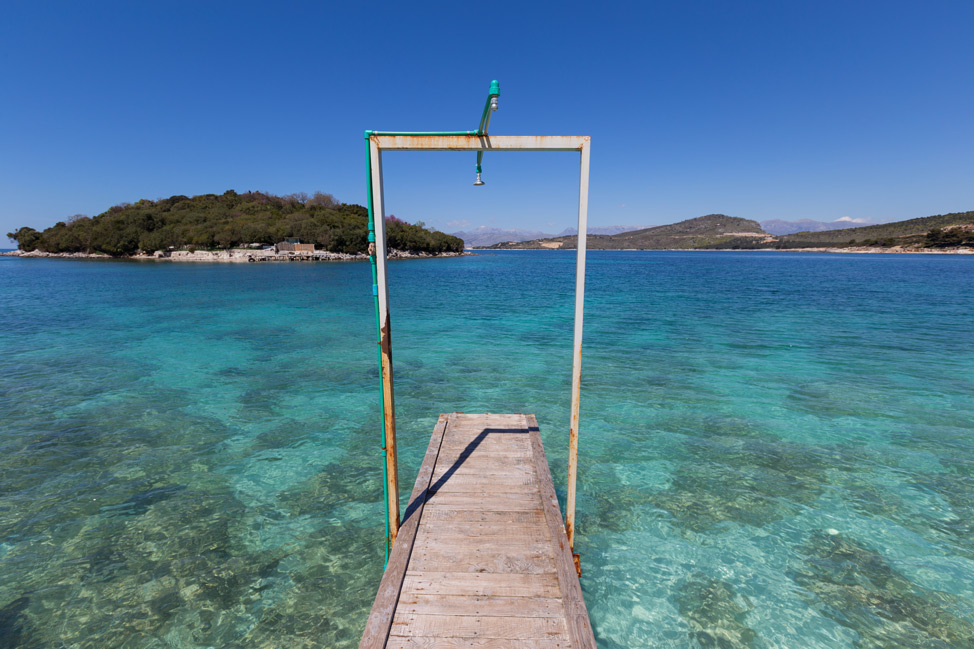
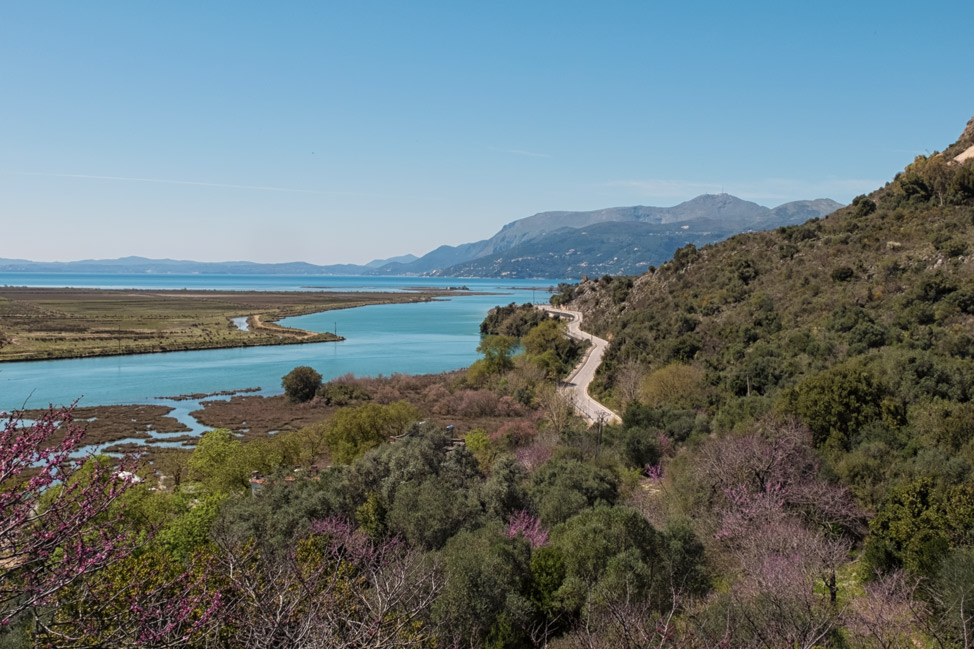
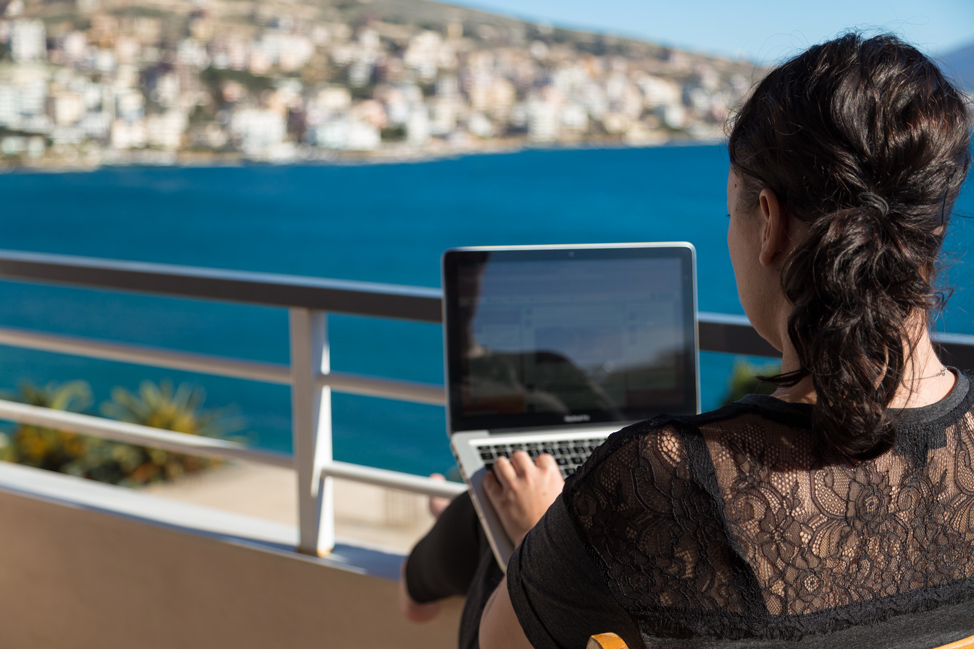
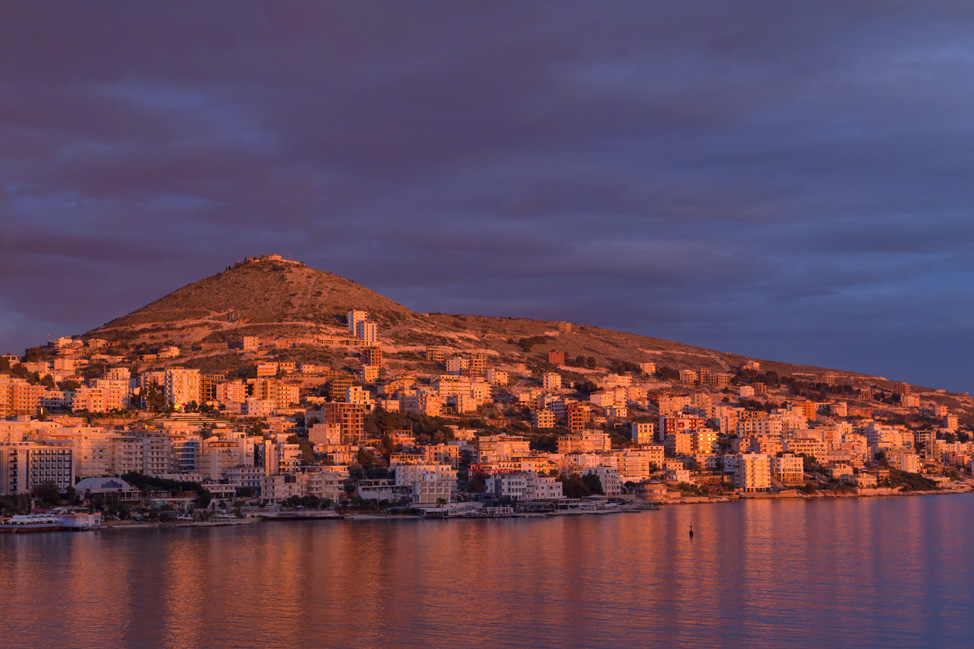
It is of dreams, this place. Relatively unknown to tourists, the Caribbean blue waters, and a bargain on every purchase. Before even unpacking our bags in Sarandë, we bragged on every network about this view that we would enjoy for three weeks.
Need more information for your trip? Check out our complete Poland travel guide.
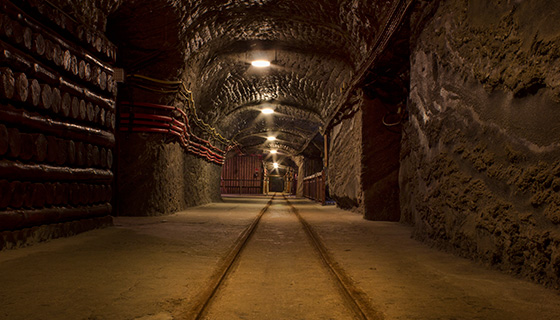
Also worth visiting: the Wielzcka Salt Mine is nearby and one of Poland’s biggest attractions.
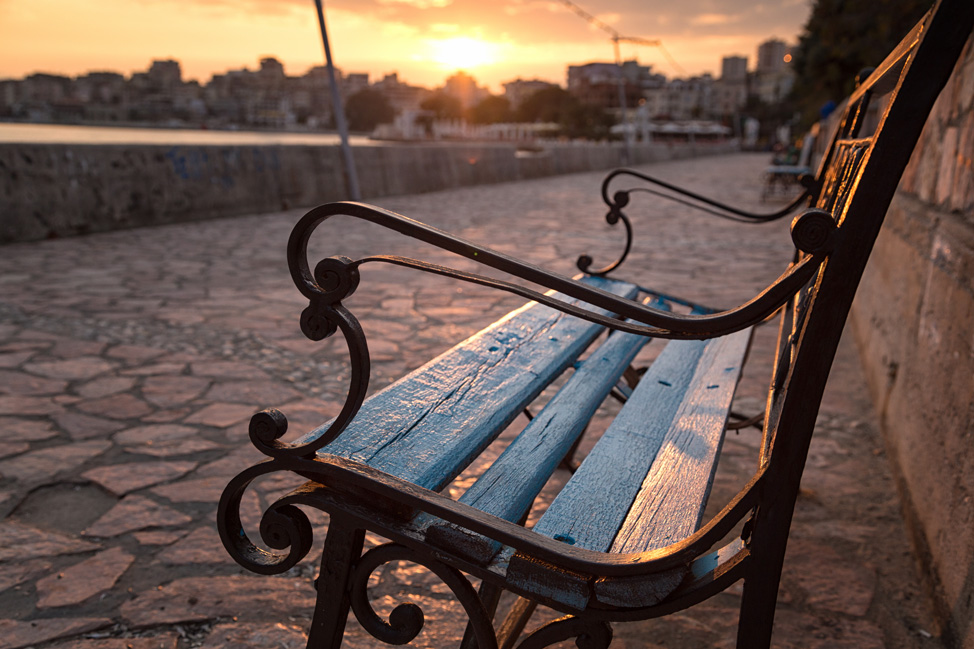
We surmised on our last day, as we walked on the boardwalk under the hot spring sun, that we had probably just come a month too early, for what makes Sarandë a paradise also makes it a bit of a torment. With very few tourists to contend with at this time of year, there was also little tourism infrastructure in place.

We would have loved the opportunity to get out on kayaks in the bay, but that was not available. We had our choice of just a handful of restaurants. Twice we climbed up to Lekursi Castle, and both times it was closed to visitors. When it’s off-season in Albania, it is quite literally off-season in Albania, more so than any other country we’ve been in.
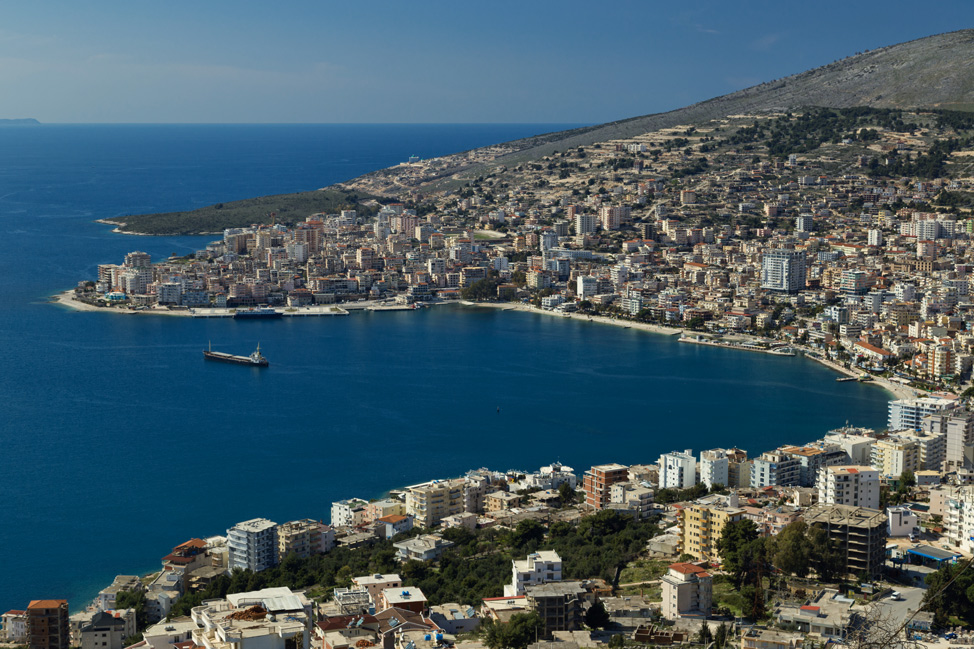
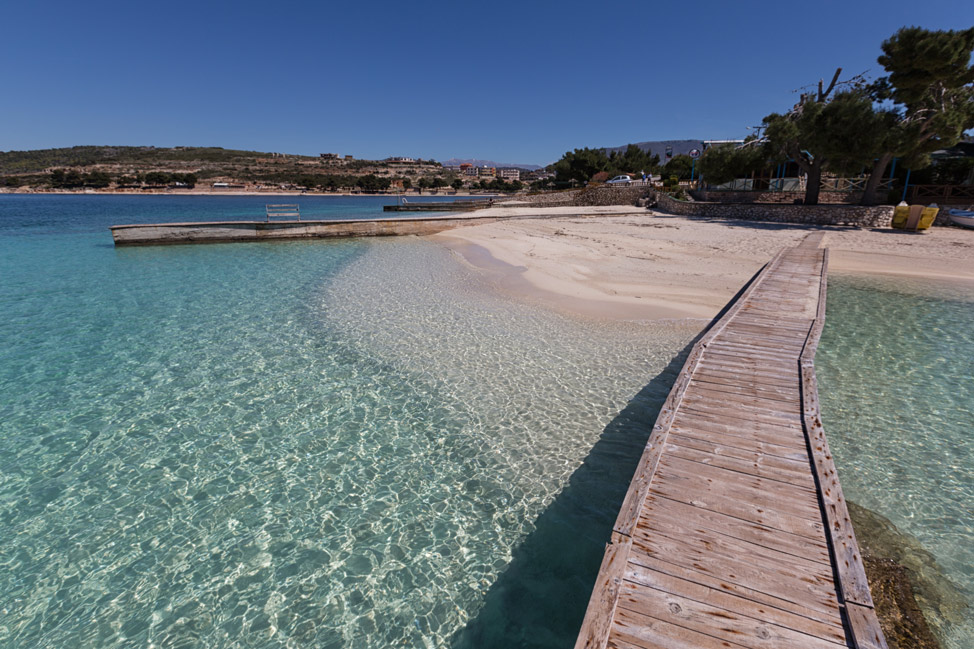
The view did help, mind you, with a morning coffee or an afternoon cocktail in hand, and in between the mountain of behind-the-scenes work we finally got to. When we did venture out, we cruised the boardwalk between the frequent spring rain spells, past vendors selling raw sunflower seeds scooped from decorative tins.
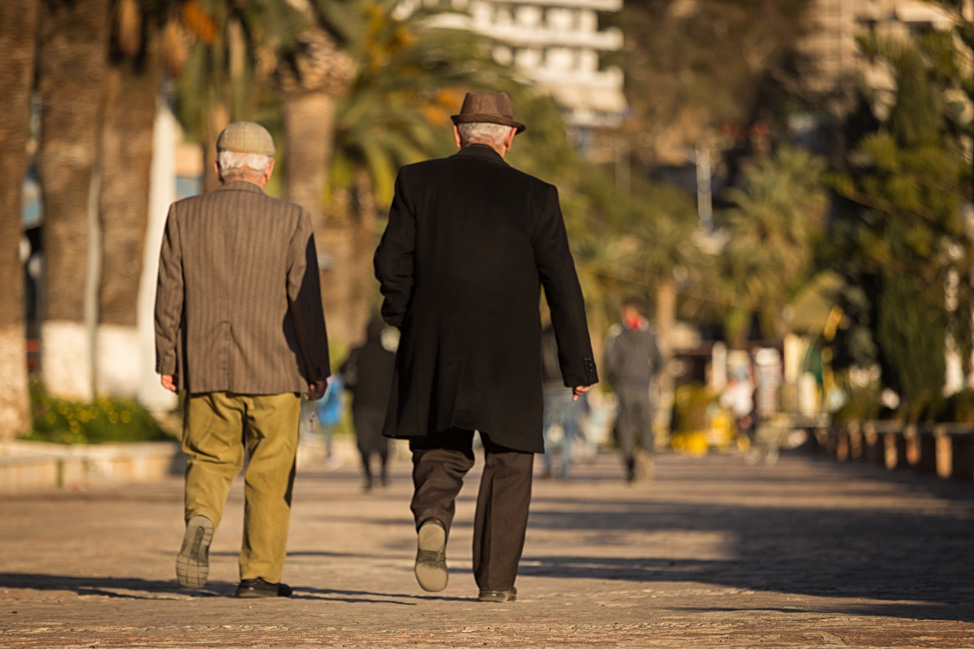
We sat for drinks at one of the many open cafes (there is an incredible number of cafes/bars in this country, compared to actual restaurants), and eavesdropped on old men dressed in impeccable suits, ties and smart hats, just out to stroll in the streets and gossip with their friends on park benches.
But we did find ourselves getting a little restless.
What makes Sarandë a paradise also makes it a bit of a torment.
It wasn’t until our last week that we struck out to explore more of the area – auspiciously choosing the very best day of weather since our arrival (largely because we both defiantly slept past the alarm the day before).
The rental car owner had warned us that our single-day plans were too ambitious, and he was right. The roads, while in relatively good condition, consistently wound up and down the coast and into the mountains that skirted it, keeping our speed minimal.
Pete took great pleasure in gliding around curves with few other cars to contend with, but he did always have to be mindful of other traffic — sheep, goats, cows, donkeys, people riding horses, a lady with an axe, and the occasional washout or pile of crumbled rocks. We didn’t get as far north or inland as was recommended, but we really could not claim disappointment with our day in the slightest.
This is how far we got.
Albanian Riviera Road Trip
We love the freedom of a road trip at our own pace, but if you don’t want to drive, this highly rated tour will let you see a few key spots outlined below, all while being led by a knowledgeable guide.
Butrint
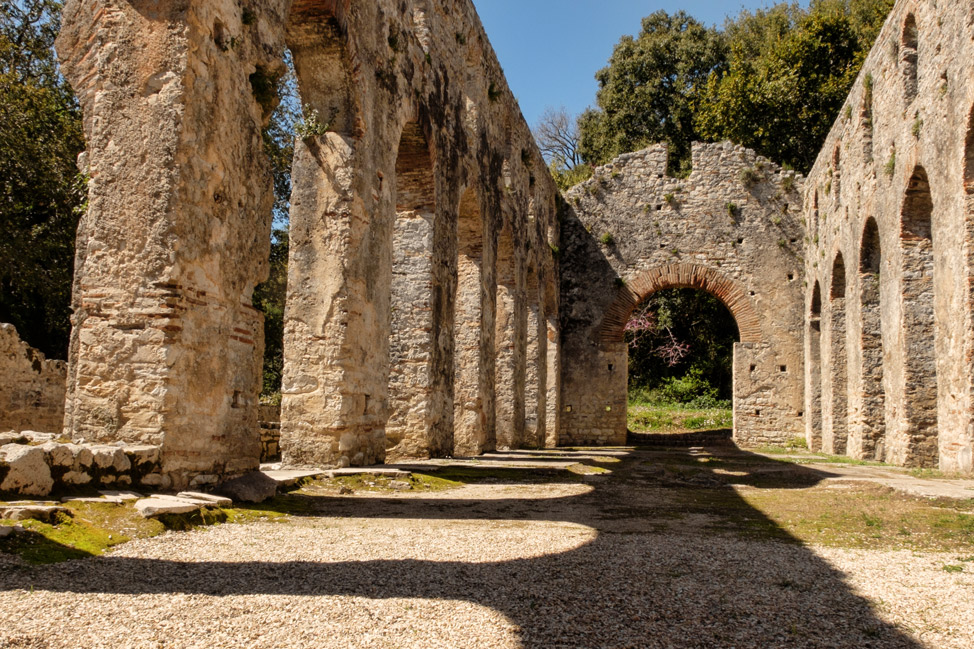
Less than 20 km south of Sarandë is the ancient city of Butrint, one of only two UNESCO sites in Albania (Berat being the other), containing artifacts and structures dating back to the Bronze Age.
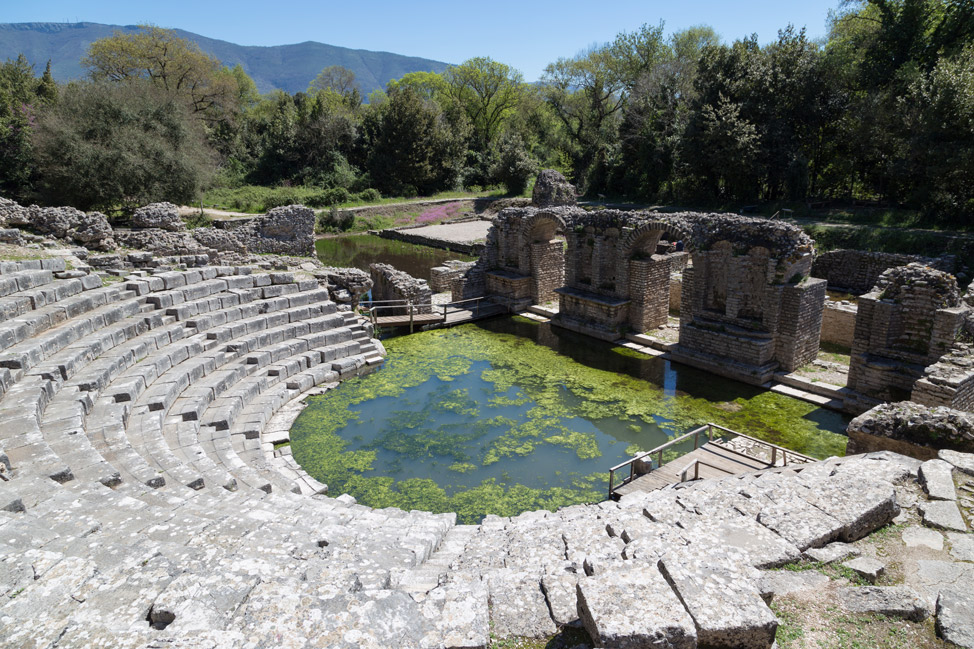
Of all the ancient ruins we’ve visited over the years, this small site is placed firmly among our favourites. With few other tourists to contend with and in its natural swampy state, inviting frogs and turtles to live among the ruins, we could have whiled away much more time enjoying Butrint if we hadn’t had such a heavy day of touring planned.
What makes Butrint so special is the sheer accumulation of history compressed into one small, forested peninsula. Greeks, Romans, Byzantines, Venetians, and Ottomans all left their mark here — you walk from a Greek theatre to Roman baths to a Venetian tower within a few hundred metres, the jungle-like vegetation threading through it all. The amphitheatre alone is worth the trip: remarkably intact, improbably quiet, and with a quality of light filtering through the trees that makes it feel genuinely ancient rather than curated. We sat there longer than we probably should have.
The site is surrounded on three sides by water, with Lake Butrint on one side and a channel on the other, giving it an island-like atmosphere and explaining why so many civilizations found it strategically irresistible. A small ferry crosses the channel from the car park to the ruins, adding to the sense that you’re arriving somewhere genuinely apart from the rest of the world.


Ksamil
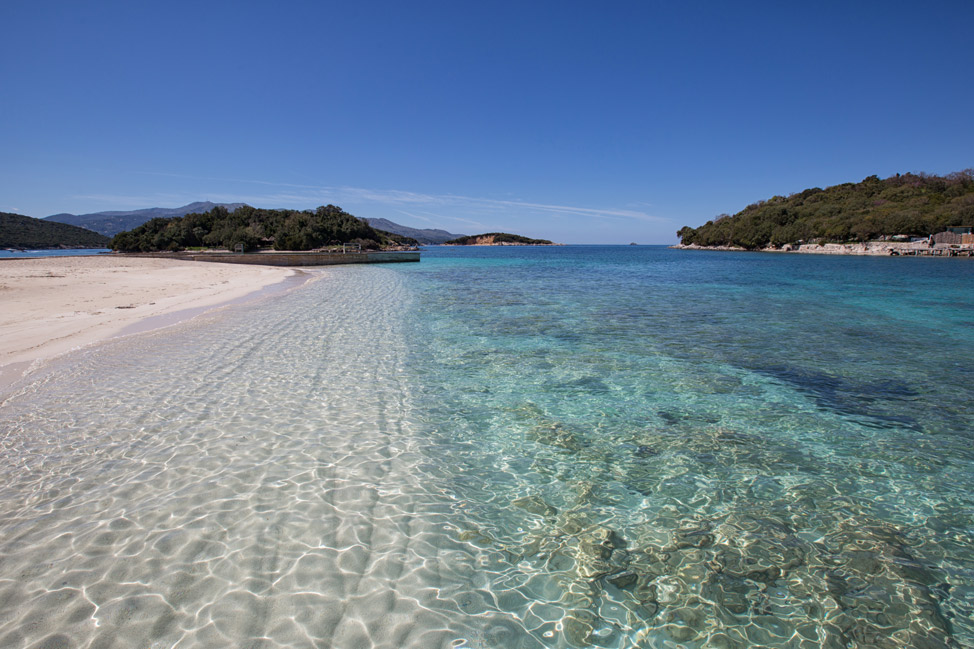
Just north of Butrint is dreamy Ksamil. Here, we declared, with complete sincerity, that we had found the nicest beach in all of Europe. That’s a large claim, and we stand by it.
The water is the thing: Caribbean blue is the only description that comes close. It’s warm, clear to the bottom, and shallow enough to wade out surprisingly far, which makes it as good for floating aimlessly as it is for swimming.
There are three small islands just offshore, close enough to swim to in calm conditions, which become busier in summer with restaurants and bars operating on them. We were lucky to find one open during our off-season stop; it was a simple place that served cold beer and grilled fish, which was all we needed. In peak season, the choice is considerably more varied.
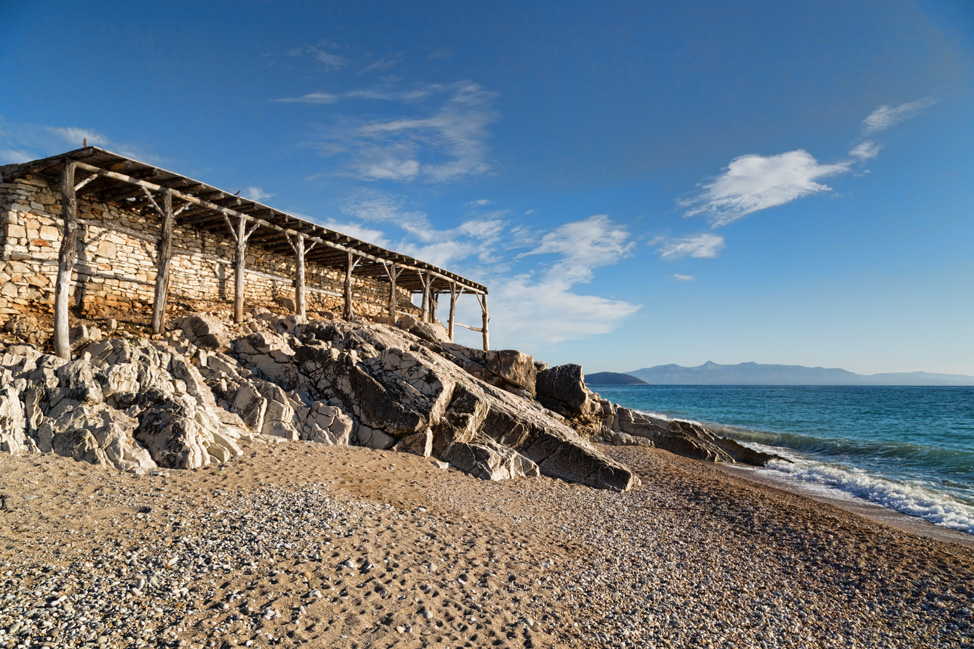
The beaches themselves are a mix of sand and fine pebble, and in July and August, they fill up quickly with sun loungers, beach bars, and the full Mediterranean summer atmosphere. If that’s not your scene, go in May or June when the water is still warm, and the crowds haven’t yet arrived, or head just south of the main beach to find smaller, quieter coves that the day-trippers don’t always reach.
What hasn’t changed, and won’t change, is the fundamental quality of the place: the colour of the water, the outline of those islands, the mountains pressing down to the sea behind it all. Ksamil is genuinely, stubbornly beautiful regardless of the season or the crowds.

Monastery Beach
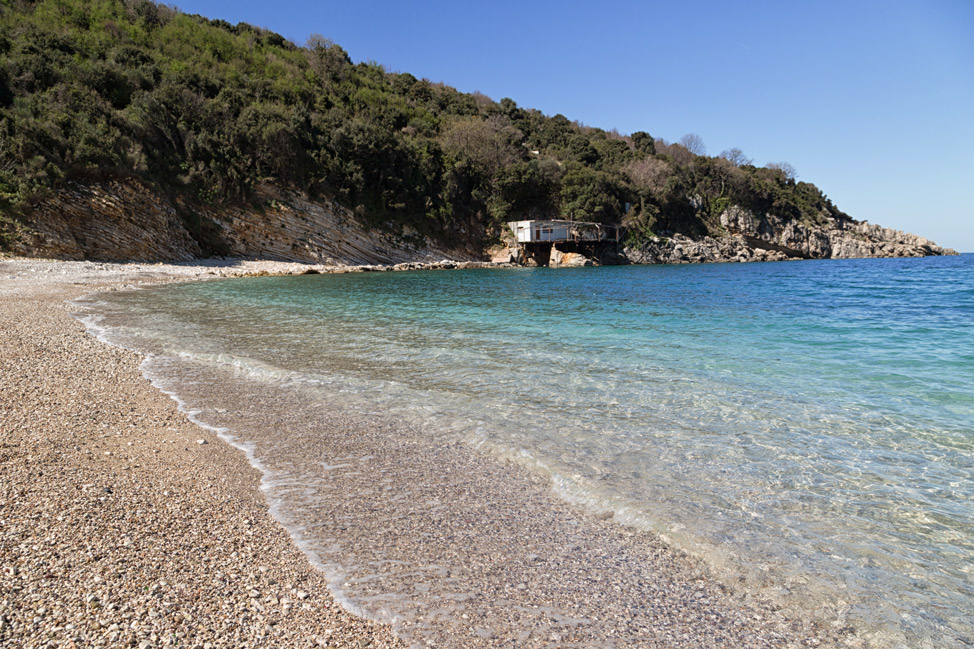
If Ksamil is too busy in the summer months, then just south of Sarandë is the secretive Monastery Beach. Most visitors driving the coast road never find it, which is precisely its appeal.
It takes a good climb up, then a steep descent along a rough hillside path to reach it (expect this to take 15-20 mins each way). The effort filters out the casual visitor, which means the beach rewards those who make it with something increasingly rare on the Albanian Riviera: genuine quiet.
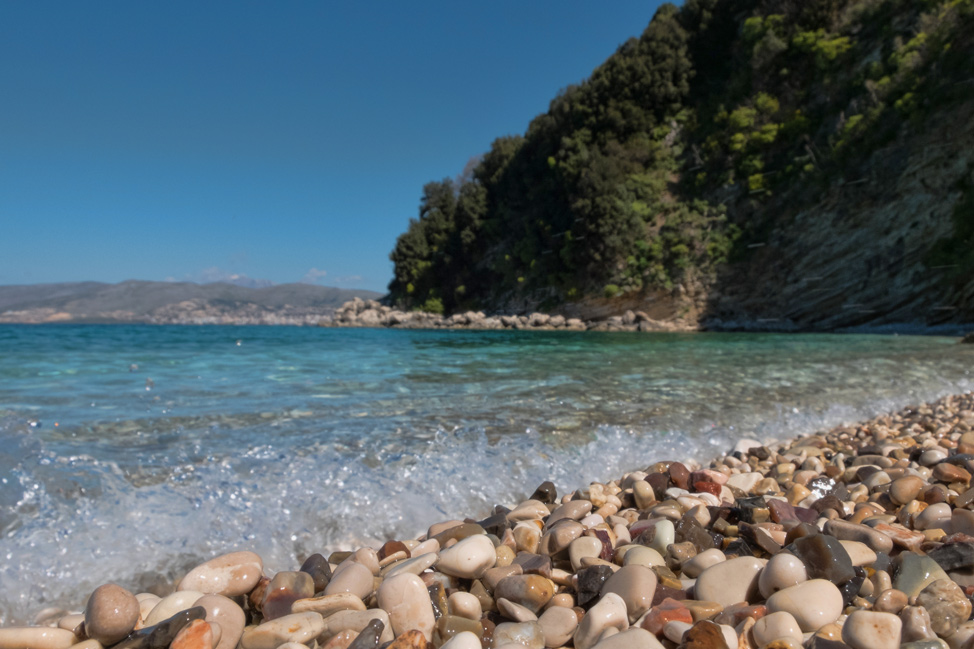
The beach itself is rockier than Ksamil, the kind of smooth grey-white stones that roll underfoot as you wade in. But the water is just as clear, just as blue, and the swimming is excellent. A small monastery sits above the beach on the hillside (hence the name), lending the cove a stillness appropriate to the setting. On a clear day, the views back toward Sarandë across the bay are exceptional.
We had the beach almost entirely to ourselves during our visit, which felt like getting away with something. Whether that’s still the case in high summer, we honestly can’t say — but the approach road alone will always deter a certain percentage of visitors, which is fine by us.

The Blue Eye (Syri i Kaltër)
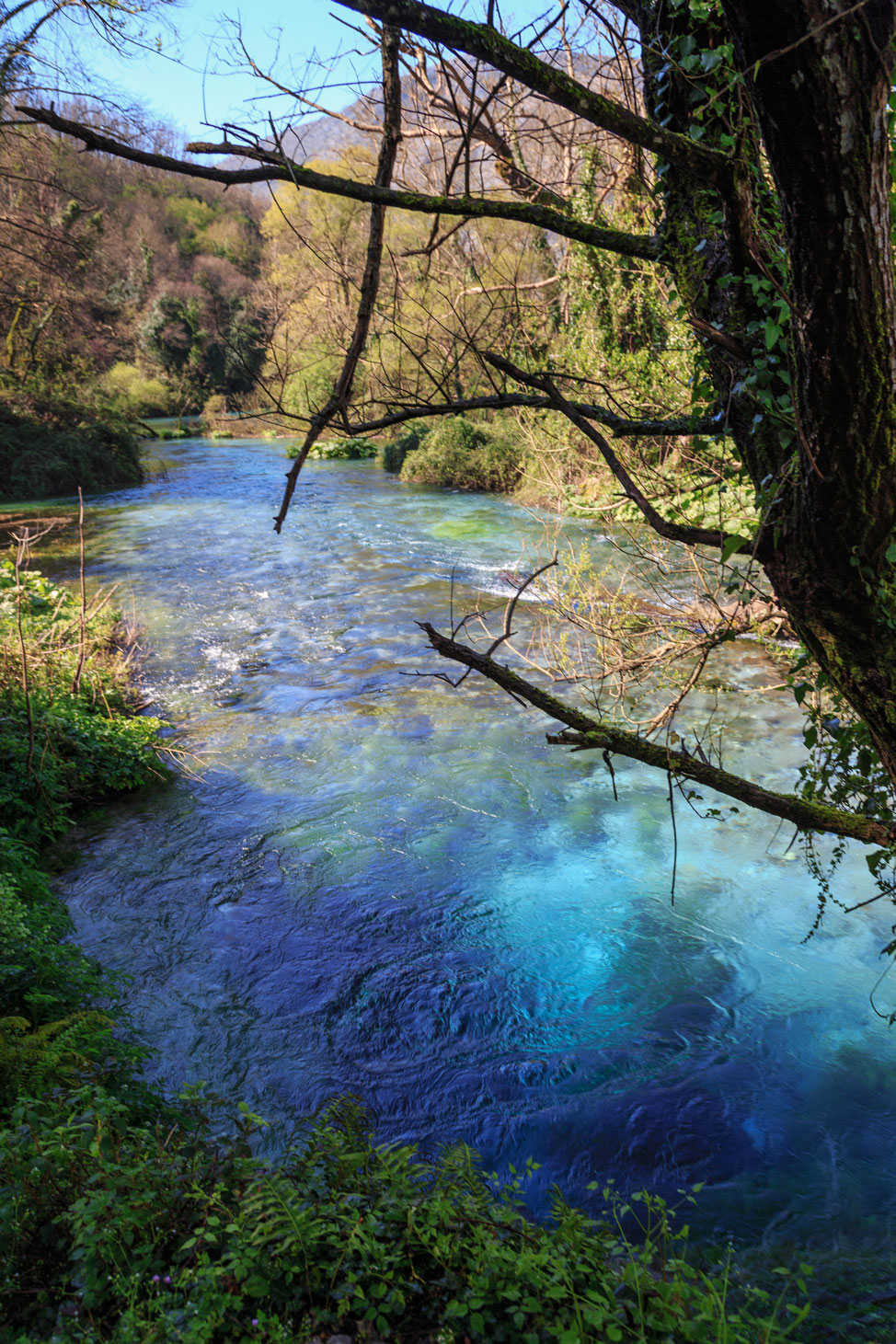
Heading inland from Sarandë, we found the Blue Eye, one of those places that defy easy description. This is where the Bistrice River begins: clear blue water bubbling up from a pool more than 50 metres deep, swirling in impossible shades of blue and turquoise before beginning its journey to the Ionian Sea. We had never seen the actual source of a river before and hadn’t expected it to be quite so hypnotic.
The name Syri i Kaltër means “the blue eye” in Albanian, and from above, you can see why. The spring looks exactly like an enormous, staring eye set into the earth, the colour shifting from deep cobalt at the centre to brilliant turquoise at the edges. It is strange and beautiful, and unlike anything else we saw in Albania.

Himarë
Heading north from Sarandë, we had the intention of getting as far as Himarë, but didn’t quite make it. We had clearly underestimated the number of photo stops we would make along the way, and it was slow going as the road consistently dipped nearly seaside and then back up again, along thin mountain edges. However, based on everything we’ve read about it, we missed the best town on the coast.
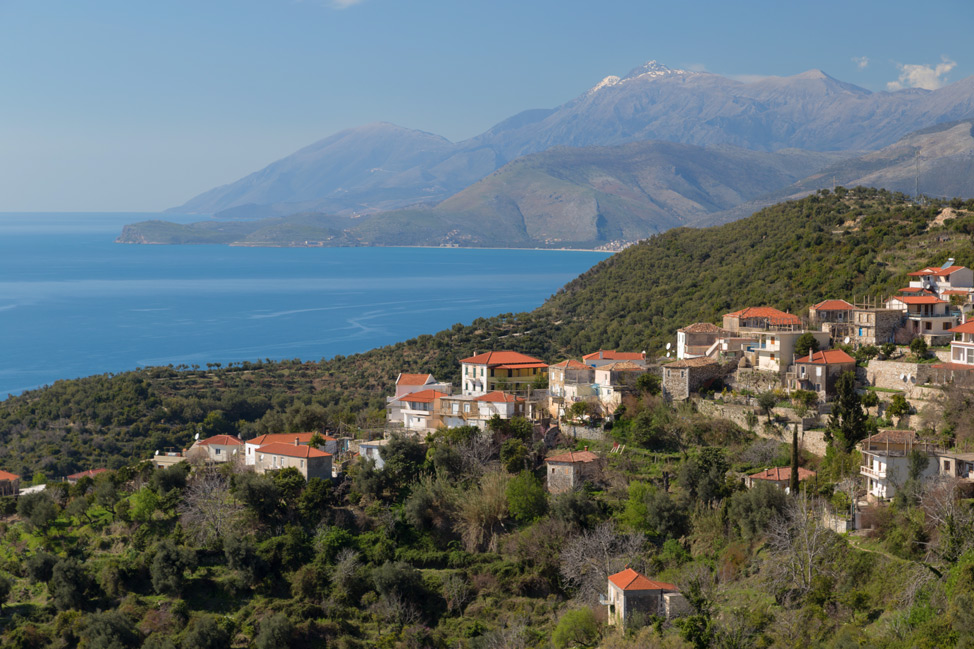
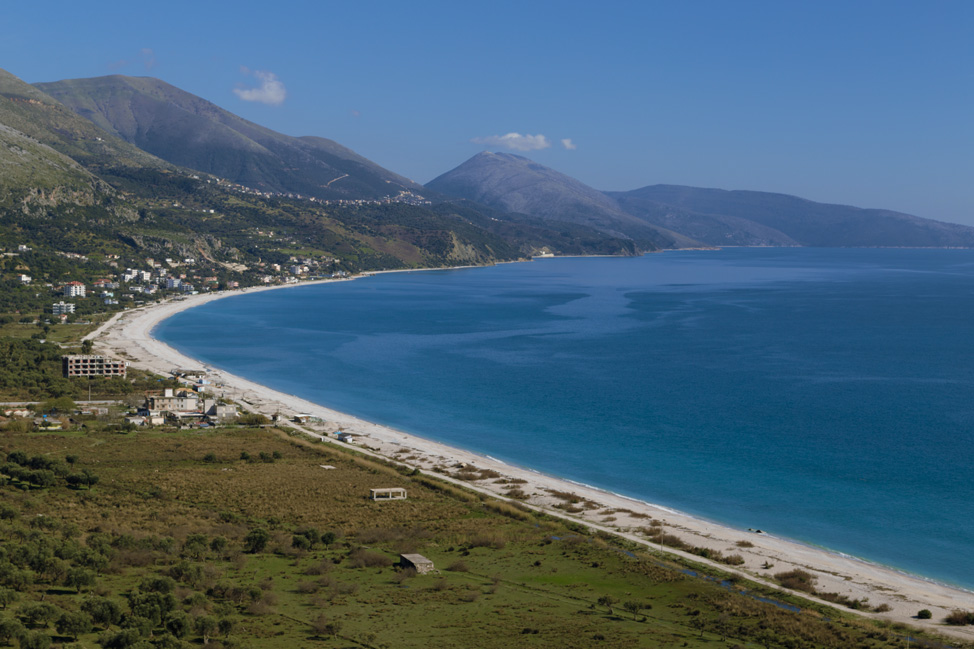
Himarë is a small coastal town about 90 minutes north of Sarandë. It’s home to sandy beaches, turquoise waters, and beautiful bays. Most crucially, as of this writing, it’s still free of the big tourist crowds that have descended on Ksamil and Sarandë in recent years. Built within a large bay at the foot of the Akrokeraune Mountains, it has an authentic charm and an abundance of pebble beaches that are some of the most beautiful in Albania.
Himarë Castle, dating back to the 5th century BCE, sits on a hill above the town. Boat trips are one of the best things to do here, cruising the coastline past secluded beaches and small coves that you simply can’t reach by road. Livadhi Beach sits beneath the castle and is the main swimming spot in town, while Aquarium Beach (named for the clarity of its water) requires a bit of a walk but rewards the effort handsomely.
Himarë is 25–50% cheaper than Sarandë and Ksamil for comparable standards, making it an increasingly attractive base for travellers who want the Albanian Riviera experience without the peak-season price tag or party atmosphere. It’s where we’d stay if we went back (and we intend to go back).

How to Get Around the Albanian Riviera
Getting There
The most popular entry point for international visitors (and the most scenic) is the ferry from Corfu.
From Corfu (Greece)
Sarandë sits just 23 nautical miles across the Ionian Sea from Corfu’s southern tip. Ferries are operated by Finikas Lines, Ionian Seaways, and Albania Luxury Ferries, with the crossing taking approximately 30 minutes. Foot passenger tickets generally cost between €19–30 each way. In peak summer, there are multiple daily departures; in low season, services reduce significantly, so check current schedules before planning around a specific crossing time. Book in advance because the route fills up quickly in July and August. Also note that the city is listed as “Saranda” on ferry booking sites, rather than in Albanian spelling.
There is a one-hour time difference between Greece and Albania, and you’ll need either a valid passport or national ID card (for Schengen Area citizens) to cross.
By bus from Tirana or other Albanian cities
Sarandë is connected to Tirana and other Albanian cities by furgon (shared minibus) and coach services. The journey from Tirana takes approximately 4–5 hours along increasingly scenic roads as you drop toward the coast. This is the budget option and gives you a broader sense of the country if you’re doing more than just the Riviera.
By rental car
If you’re planning to explore beyond Sarandë and Ksamil (which we strongly recommend!), renting a car is by far the most flexible option. The coastal road north is one of the most spectacular drives in Europe and simply can’t be done justice by public transport. Several rental agencies operate in Sarandë; the owner of the Fun & Sun Hostel is frequently recommended for a reliable, informal arrangement.
It is possible to see all of the above via public transportation, but not in one day. Renting a car in Sarandë is easy and relatively inexpensive, and for those wanting to explore more of the coast north toward Himarë and beyond, it’s by far the best option.

Where to Stay on the Albanian Riviera
Below are options for both Sarandë and Himarë based on positive reviews online (the place we stayed at is no longer available). We would stay at all of these places!
- Sarandë: Hotel Vale is a great option, right on the beach. If you prefer an apartment (we usually do), this one is also in a prime location and has some…ummm…interesting design choices!
- Himarë: Another gorgeous beachfront hotel with exceptional amenities. But if you want a stylish apartment option in a perfect location, Lido Apartments hits the mark.

Best Time to Visit the Albanian Riviera
We visited in early May 2015 and experienced the Albanian Riviera at its quietest; it was too quiet, in some respects, with many restaurants and tourist services still closed for the season. Here’s how the seasons break down based on what we experienced and what travellers report now:
May and June are ideal. The water is warm, the beaches are relaxed, and you can move around without the heat or crowds of midsummer. Everything is open, prices are lower than peak season, and the landscape is still lush and green before the summer sun bakes it dry.
July and August are peak season! The beaches are full, expect higher prices, and a livelier (some would say louder) atmosphere throughout. Ksamil and Sarandë, in particular, get very busy. Not a reason not to go, but go with eyes open. Himarë and the villages further north hold up better in peak season than the main tourist centres.
September and early October are the other sweet spot. The light turns golden, the evenings are perfect, and the sea stays warm well into autumn. Shoulder-season prices return, and the summer crowds thin out while everything stays open.
November through April probably better replicates our 2015 experience, in that off-season in Albania is very off-season. A handful of cafes stay open year-round, but much of the tourism infrastructure genuinely closes. Not recommended unless you’re specifically seeking solitude and don’t mind limited options.

Other Practical Information
Currency: Albania uses the Albanian Lek (ALL). Euros are widely accepted in tourist areas, restaurants, and hotels, with change typically given in Lek. Card payments are increasingly common in restaurants and hotels, but not universal — carry cash for beach bars, local buses, and markets.
Language: Albanian is genuinely difficult but locals deeply appreciate any effort. “Faleminderit” (thank you) goes a long way. English is widely spoken in the tourism industry throughout Sarandë, Ksamil, and Himarë.
Safety: Albania is safe for tourists. Use the same common-sense precautions you would anywhere in Southern Europe.
Visa: Most Western passport holders can enter Albania visa-free for up to 90 days. Always verify current entry requirements before travel as these can change.
Driving: The roads along the Riviera are in reasonable condition, but are consistently winding, keeping speeds low. Budget significantly more travel time than the map distance suggests (we learned this the hard way). Watch for livestock, pedestrians, and the occasional washout or fallen rocks.


Definitely makes me reconsider going back to Albania! I stayed in a beach town, but it was an overdeveloped place with ugly buildings and a dirty beach. Nothing like these places!! I can absolutely understand why you loved it so much.
Albania definitely deserves more than a glance!
Wow – look that that water!
Such a beautiful country. I’ll definitely be back to explore it more.
After 12 months of traveling, we’ve been home for 1 month & reading this & seeing these pictures makes me want to pack my bag & head out again. It’s weird when I’m away for a long time, I long for home. And now that I’m home, I already feel myself itching for another adventure. I don’t know how to align these two needs, hopefully I can figure it out this time… as this is our third time trying to “re-enter” home after extended travels away 🙂
I get that! While we’ve never tried to re-enter (knowing it would be futile), even a couple of weeks into a house-sit I start to feel the same way!
Wow. Just wow. I had no idea Albania was that pretty! I’m heading to the Balkans in a few weeks, but will only make it as far south as Montenegro. It has been exciting to follow your travels in the area!
Montenegro is really beautiful, I am sure you will love it! A post from there is coming up next. 😉
Another great taste of Albania. I can’t wait to see Saranda and Butrint and we’ll be there tomorrow! We were a little disappointed today with the ruins at Apollonian but it looks like Butrint will make up for it.
I hope you enjoyed it Stacey
I only had a small taste of Albania, visiting Butrint and Saranda which are both so beautiful. I would definitely like to go back one day and explore more
Just beautiful photos guys — you’ve done the Albanian riviera justice. We came back gushing about it about a year ago, and still do to anyone who would listen 🙂
Thank you! Glad to know we’ve served the area well. We’re still gushing too!
I was in Saranda in 1992… gosh, that’s more than 20 years ago… It looks much the same in your photos. Such an interesting place in an odd and unusual sort of way.
I never thought Albania could be this beautiful. You make me want to travel there in an instant. Albania now in our bucket list. Thanks for sharing this. Pictures look great
Simply beautiful!
Wow! Beautiful photography. I haven’t been to Albania, so I enjoy even more to see these photo and read about Saranda.
Wow! Can’t help but fall in love at that beauty!
So glad you enjoyed Albania and got some stunning photos to prove it! I travelled there for a month back in 2005 so if you think its quiet in off season now, you should have seen it then! I still loved it however, and thoroughly enjoyed the huge numbers of cafes that dot the country! The sights of older men playing dominoes on street corners and archeologists still excavating Butrint as we walked around will never be forgotten for their authenticity and charm
I’ve never had a desire to go to Albania until now. Your pics are amazing guys and having read about your experience, Albania is now on my list. I think renting a car would be the best way to get around and take in all there is to see.
Thanks for sharing 🙂
wow really gorgeous places!!!
The water in all of your stops is unreal…so perfect and clear. Love reading about your Albanian travels, keep it up!
Beautiful place. I never thought of Albania as a riviera type destination. Very intriguing.
Planning my travels right now in Albania. I wasn’t planning on going this far south, but it looks like that’s where the best beaches are. These are all amazing photos! The Blue Eye looks magical! thanks for sharing!