
Visiting San Juan Chamula: Inside Chiapas’ Most Extraordinary Church
Words by Dalene Heck / Photography by Dalene & Pete Heck
Of all the places we visited during our month based in San Cristóbal de las Casas, none stayed with us longer than San Juan Chamula. This small Tzotzil Maya town in the Chiapas highlands is home to a church unlike any other in the world — one where Catholic imagery mingles with pre-Hispanic ritual, where candles and copal incense replace pews, and where healing ceremonies involving animal sacrifice take place in plain sight. It’s confronting, captivating, and completely unlike anything you’ll encounter anywhere else in Mexico.
If you’re visiting San Cristóbal de las Casas, a day trip to San Juan Chamula (often combined with a stop in nearby Zinacantán) should be at the very top of your list.
What Makes San Juan Chamula Unique
The Chiapas highlands are home to dozens of indigenous communities, each with its own language, traditional dress, and customs. But San Juan Chamula stands apart. The Tzotzil people who live here operate with a fierce and largely recognized autonomy: they have their own police force, their own governance, and their own religious rules that all residents are expected to follow. Of the town’s roughly 80,000 citizens, there are 120 spiritual leaders.
The faith practiced here is sometimes called “traditionalist” Catholicism, a blending of Catholic imagery brought by Spanish colonizers in the 16th century with deep-rooted Mayan spiritual beliefs. The two didn’t fully fuse; they layered over each other, and what remains is something neither Rome nor the ancient Maya would entirely recognize. Chiapas’ high-altitude geography, with its winding roads and deep valleys separating towns by miles that once felt like worlds, allowed these distinct beliefs to develop independently. The Vatican has no official jurisdiction over the churches here.
A Morning in Zinacantán
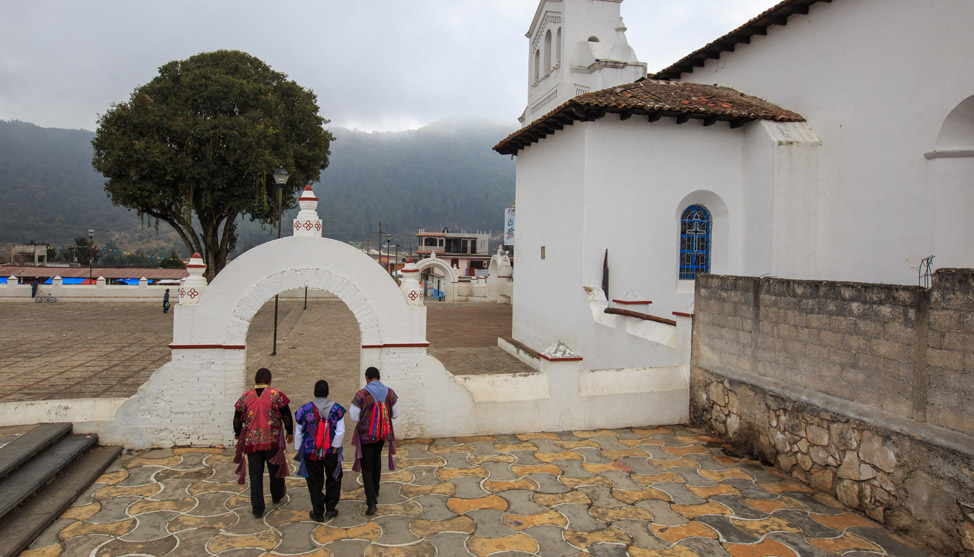
We started our day in the nearby town of Zinacantán, which is worth visiting for its extraordinary textile tradition alone. The women of Zinacantán are renowned weavers, producing intricately patterned fabric in saturated pinks, purples, and greens that you’ll see worn throughout the town and sold in artisan workshops open to visitors.
Our guide César led us into a church mid-service. There were no pews; everyone was standing. Women wore traditional dress: stunning fuchsia shawls woven with colourful patterns over bright tops and long dark skirts. Heads turned as we entered, then refocused forward. We stayed near the back.
César eventually shepherded us into a side room. Hundreds of candles surrounded us — some lit, others snuffed out — all encased in wax that had formed arbitrary patterns across the ceramic floor. Among them: carved animal figurines called companio. “We are all connected,” César said.
He explained the role of the volunteer religious leaders who serve for a year at a time. The position requires being married (though not restricted to one wife), and comes with no income. Leaders must save in advance to cover the costs of flowers, candles, alcohol, and ceremony supplies. It is a position of enormous prestige with a waitlist.
The colour of the candles, we learned, represents the different colours of corn, a central symbol of survival in this culture. Mirrors hang around the displayed saint to reflect sunlight.
On our way out of Zinacantán, we passed a large procession and spotted a Catholic bishop’s pointed hat among the crowd. What the procession was for, César didn’t know.
Entering the San Juan Chamula Church
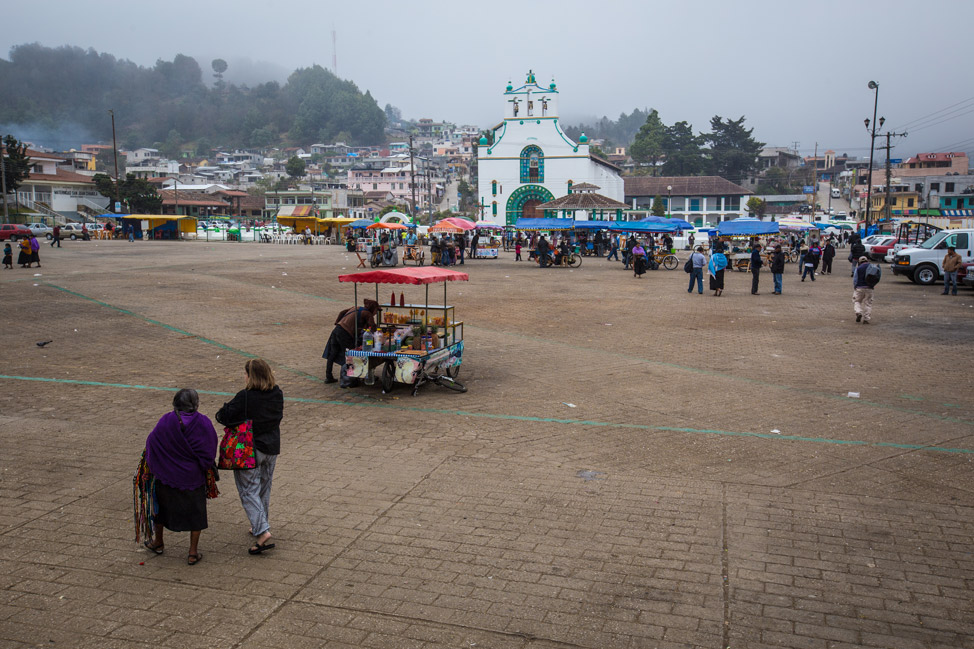
From Zinacantán, we drove to San Juan Chamula — the most visited town in the area and considered a centre of indigenous culture in Chiapas.
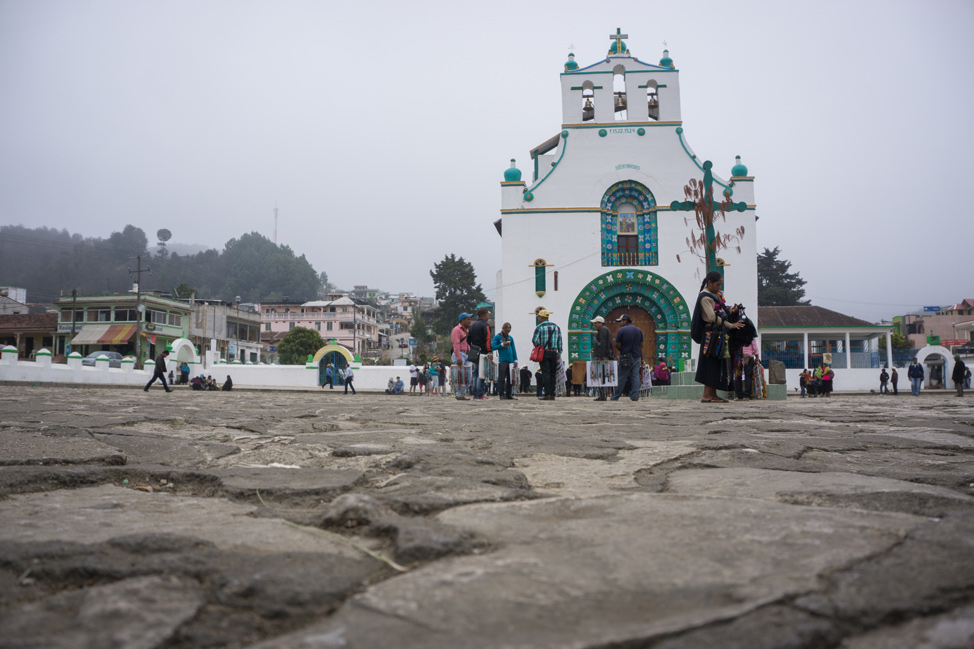
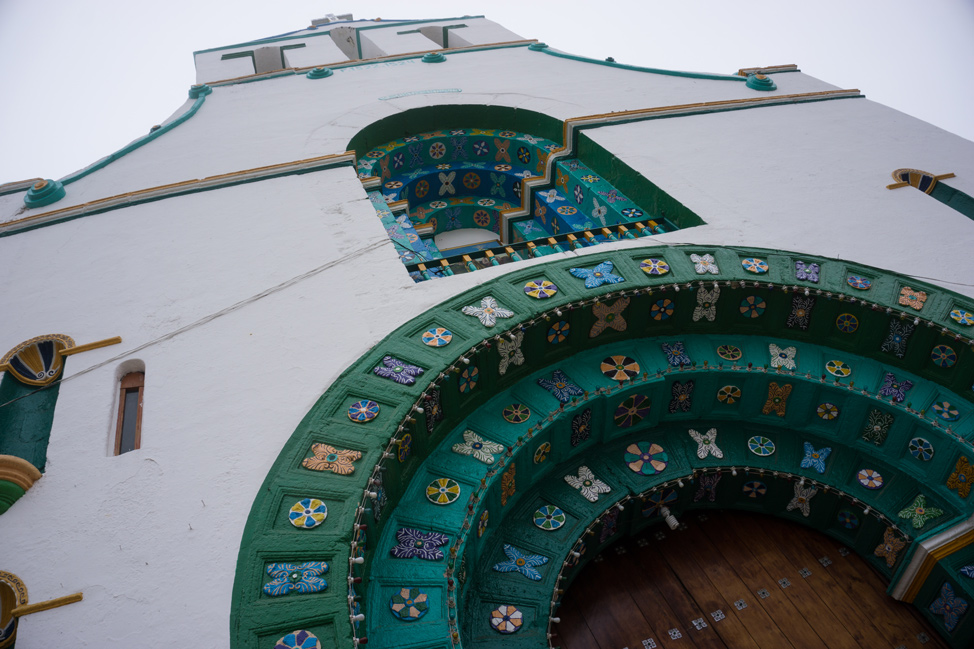
We were held at the church door and given firm instructions before entering: walk through and do not disturb, do not stop and stare, and do not take photographs under any circumstances. The penalty for violating the photography rule is confiscation of your camera and a day in the town jail, which is open for public viewing and ridicule. No one tested it.
The air inside was thick with incense. The interior was dark and smoky, lit only by candles. Floral fabrics draped from the ceiling down to the walls. Wax ran along the floor in rivers between clusters of candles. Homemade corn liquor called Posh sat in repurposed soda bottles among the candles. Giant brass bells stood near the altar, dedicated to Saint Jean Paul, with Jesus seated to his side.
We walked the length of the room and returned to a corner near the door. César described what we were seeing around us.
He paused at one point as a religious leader moved through the church toward the altar, preceded by a wave of incense, a trumpet, and a drum. Others scraped hardened wax from the floor as part of their ceremonial duties.
The Healing Ceremony and Animal Sacrifice
Small stations were set up on the floor around the church’s interior, each attended by a shaman. Their patients were not seeking treatment for physical ailments — they were there for a loss of spirit, César explained.
The shaman first takes a pulse reading, then decides which colour of candle to light and which animal to sacrifice for the healing. Different-coloured live chickens are used for different ailments, and the selection also depends on the patient’s gender and age.
We watched one shaman holding a speckled chicken, one hand on its neck, the other on its body, slowly waving it over the candles lit before her. She moved it back and forth, speaking casually to the person beside her, smiling gently.
And then, without flinching, she brought the chicken back to her body, twisted its neck, and held it while it twitched. When it stopped moving, the chicken was laid on the floor beside her.
Having heard about this ritual before our visit, I expected it to be a wretched thing to witness. Instead, it was a captivating act, done so simply and so quietly that it could almost be called peaceful.
César explained that the ill person would then eat the chicken’s head and retreat to a private room for five days. The family would consume the rest.
How One Becomes a Shaman
I asked César how someone becomes a shaman.
“Through their dreams,” he said. “In their dreams, the shamans are called to this service.”
The path is long. After the calling (which may come through dreams, visions, or other experiences), the person seeks out an established shaman or curandero (healer) to apprentice under. The traditional healing techniques, rituals, and spiritual practices are passed down through generations. From there come years of learning, a formal series of initiations and rites of passage, the gradual development of community recognition, and eventually, practice. It is not a simple or quick process.
The Drive Back to San Cristóbal de las Casas
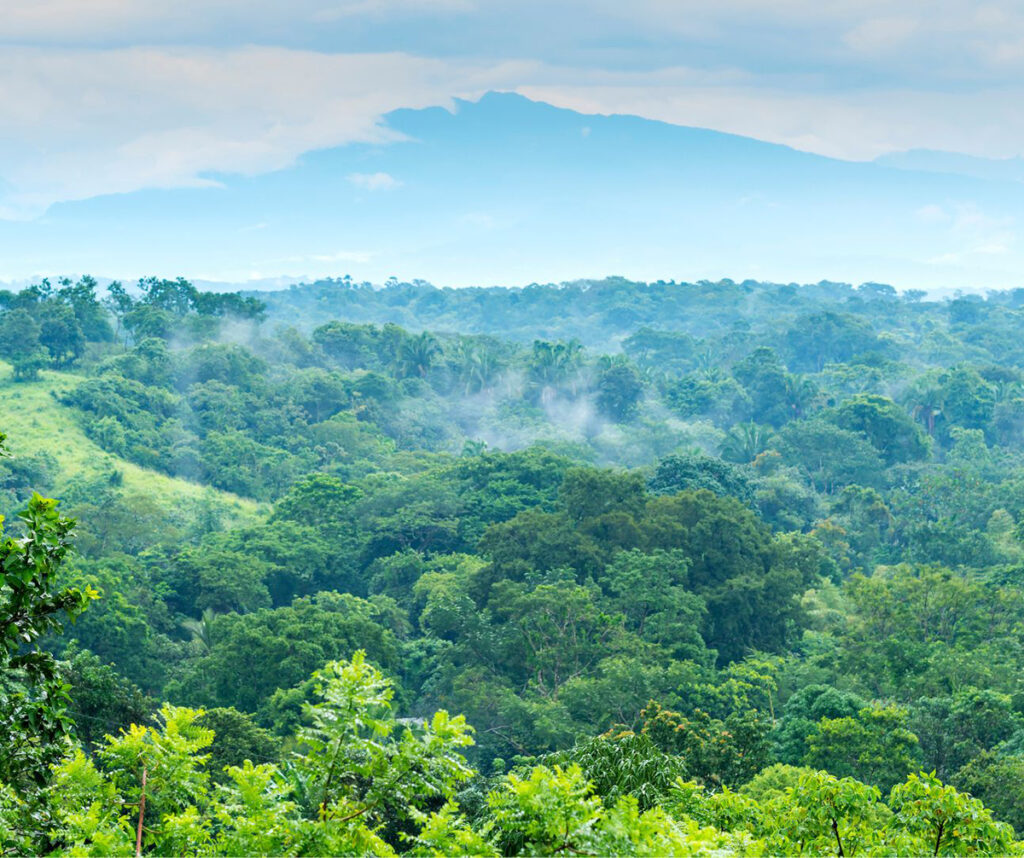
The drive back to San Cristóbal passes through terraced farmland and misty highland hills; a brief but beautiful transition from the indigenous towns to the colonial city.
By the time we returned, San Cristóbal, with its familiar streets and mix of traditional and modern attire, looked different to us. We retreated to our accommodations immediately, needing time to absorb what we’d seen.
Planning Your Visit to San Juan Chamula
Should you go with a guide?
Unequivocally, YES. Visiting San Juan Chamula is possible independently, but the experience is incomparably richer with a knowledgeable guide. Without one, you’ll be walking through the church with no context for what you’re witnessing. César’s explanations transformed what could have been a confusing or uncomfortable experience into something profound.
Our tour also included a stop at the home of a local fabric weaver in Zinacantán, who demonstrated her weaving technique and fed us blue corn tortillas. These are the moments that don’t happen if you’re navigating on your own.
We have been unable to confirm whether our guide, César, is still giving tours. However, this highly rated tour is an excellent option; it will take you to San Juan Chamula and Zinacantán, the former temple of San Lorenzo, and include some guided time in San Cristóbal de las Casas.
Getting to San Juan Chamula from San Cristóbal de las Casas
San Juan Chamula is located about 10 kilometres (6 miles) northwest of San Cristóbal. Options include:
- Tour (recommended): Most visitors join a half-day guided tour departing from San Cristóbal, which typically includes both Zinacantán and San Juan Chamula. These generally run 3–4 hours.
- Colectivo (shared taxi): Colectivos depart regularly from the market area in San Cristóbal and cost very little. You’ll be dropped off at the town entrance.
- Taxi or rental car: A private taxi is straightforward and not expensive for the short distance.
Rules and Etiquette
- No photography inside the church. This is strictly enforced. Leave your camera in your bag and don’t attempt phone photos either.
- Dress respectfully. Modest clothing is appropriate.
- Do not disturb ceremonies. Walk quietly and observe from a respectful distance.
- Be aware that there is an entrance fee to the church, collected at the door. Bring cash.
Best Time to Visit San Juan Chamula
The church and town are active throughout the year. If you hope to witness a healing ceremony, visiting during the morning tends to be more productive, as ceremonies often begin early. Festival days bring additional activity and colour, but also larger crowds.
Where to Stay Nearby
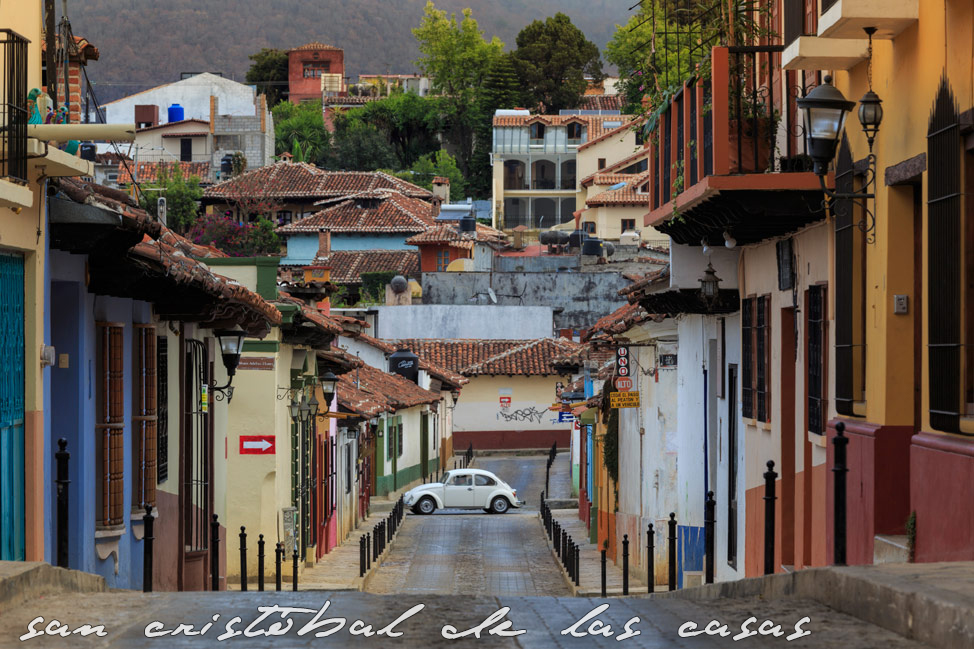
San Cristóbal de las Casas is a lovely city, close by, and very likely where you’ll stay when travelling through this area. Our hotel suggestions:
- Casa Santa Lucia. Enjoy the Mexican-style decor in this charmer, located in the city’s best area and close to everything.
- Guayaba Inn Boutique Hotel. It’s just a 10-minute walk from the centre, with colonial-style rooms. This hotel also offers regular cultural afternoons, with visits from local artists, historians and Maya experts!
Frequently Asked Questions About Visiting San Juan Chamula, Mexico
Can tourists visit the San Juan Chamula church?
Yes. The church is open to visitors, though a small entrance fee is charged at the door. The church is an active place of worship and visitors are expected to observe quietly and respectfully, not as spectators at an attraction.
Is photography allowed inside the San Juan Chamula church?
No. Photography inside the church is strictly prohibited and enforced seriously. Violations can result in confiscation of your camera and detention in the town jail.
What is the religion practiced in San Juan Chamula?
The Tzotzil people of San Juan Chamula practice a form of syncretic “traditionalist” Catholicism that blends Catholic imagery with pre-Hispanic Mayan spiritual beliefs. The church is not affiliated with the Roman Catholic hierarchy, although it was visited by Pope Francis in February 2016 to celebrate Mass with indigenous communities, directly denouncing historical discrimination and celebrating native cultures.
Are animal sacrifices common in the church?
Healing ceremonies involving chicken sacrifice are held regularly at the church as part of shamanistic healing rituals. These are not performances for visitors; they are genuine religious practices, and should be observed with appropriate respect.
How far is San Juan Chamula from San Cristóbal de las Casas?
About 10 kilometres (6 miles), or a 20–30 minute drive depending on traffic and road conditions.
Do I need a guide to visit San Juan Chamula?
You don’t technically need one, but we strongly recommend it (check out this tour). The ceremony and cultural context are complex, and a knowledgeable guide will make the experience significantly more meaningful. It was one of the most moving experiences we had while visiting Chiapas.

Wow what a moving experience. Foreign but also in some ways familiar. I don’t know how I would have taken the shaman ceremony but the whole trip sounds incredibly interesting. Thank you for sharing!
I was really worried myself for the shaman experience. 🙂 But overall it was just fascinating!
So interesting that such religious villages still exist…no separation of church and state!
I wish we could have visited and learned more in the area – there are several like this.
I always loved to travel among the churches and it’s kind a relaxing.
Connecting God and connecting people is the best thing I could ever have.
Wow incredible experience and chiapas is beautiful and the church in the photo is very unique
Great photos. What an intimate cultural experience. Having a guide definitely allowed for some unique experiences. Thanks for sharing.